2 February 2022
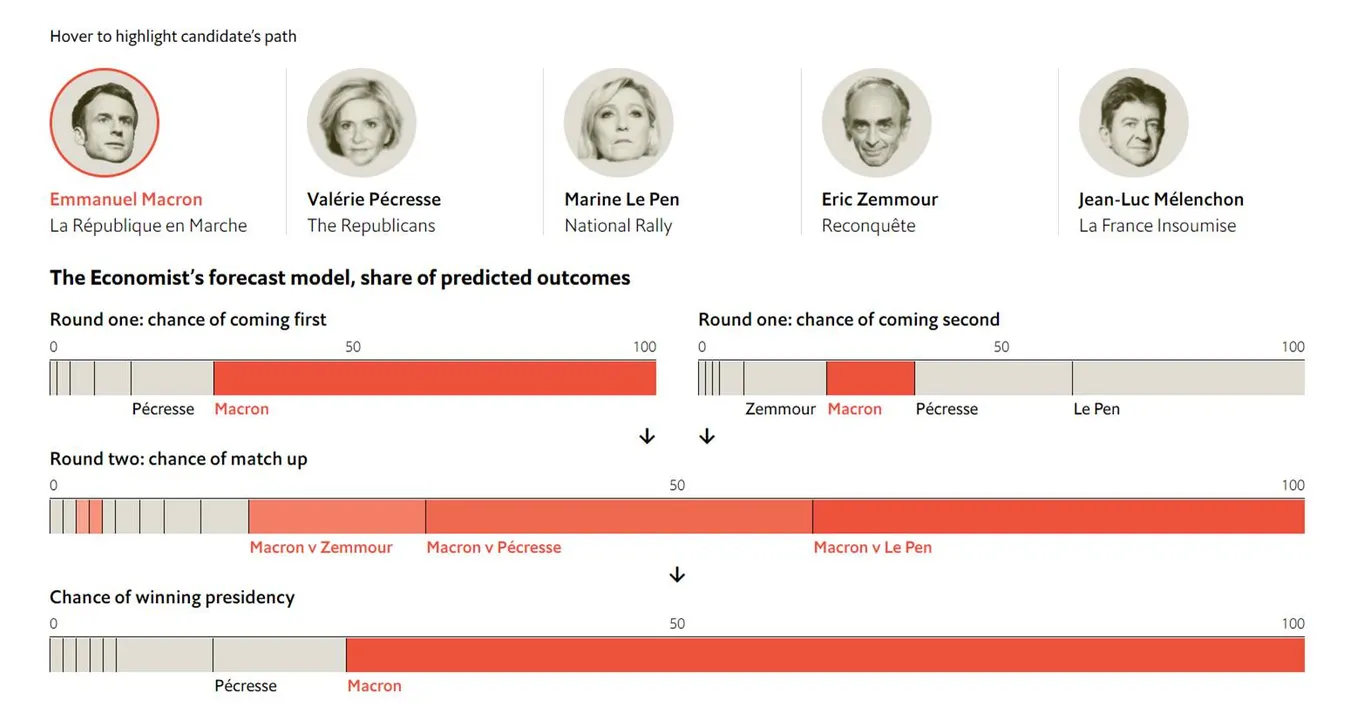
The Economist’s French presidential election model forecasts a 79% chance of victory for Emmanuel Macron; potentially serious challenge from Valérie Pécresse
Read more



Business Finance, Consumer, Entertainment, Government, Health, Lifestyle, Non Profit, Technology, Transport, Sustainability, Innovation, Editorial, Circulation, Government, Non Profit, Public Sector, Lifestyle, Consumer, Automotive, Health
LONDON, UNITED KINGDOM—May 18, 2021—The Economist, one of the world’s most trusted sources of global news and analysis, has a new Special Report on “Race in America,” just ahead of the anniversary of George Floyd’s death. The report, which is live today and in the May 22 print edition, is written by John Prideaux, US editor of The Economist, and explores the role race and racism play in American life and politics in 2021, paying particular attention to a paradox about race in America: the country is almost certainly less racist now than at any point in its history, yet it is also more divided by racism, which can still be fatal. The picture is not simply one of progress or backsliding.
Signs of progress are everywhere, from an increased acceptance of mixed-race marriages to the Black Lives Matter protests last year in response to Mr. Floyd’s killing, which were probably the largest civil-rights protests in American history. Yet almost 60 years after the passage of civil rights legislation that was supposed to end racism and usher in a new era of equality, racial disparities are all too obvious, with many American cities more segregated now than they were two decades ago.
The report charts the main currents in thinking about race and racism and also puts America, by far the most racially diverse advanced democracy, in an international context, noting that it is working out questions now that other countries will eventually have to face as they too grow more diverse.
The Special Report offers insights into how cities, states, companies, universities, charities, the White House and other institutions should think about their roles in fulfilling the promise of America’s multi-racial democracy, such as:
For more information or to interview John Prideaux at The Economist please contact:
US TomAmos@economist.com / UK HollyDonahue@economist.com
About The Economist (Economist.com)
With a growing global audience and a trusted reputation for insightful analysis, The Economist is one of the most widely recognised sources covering current affairs in the world. In addition to the weekly digital and print editions and website, The Economist publishes Espresso, a daily news app, and Global Business Review, a bilingual English-Chinese product. The Economist produces several podcasts each week and short- and long-form video. The Economist maintains robust social communities on Facebook, Twitter, LinkedIn and other social networks. A recipient of many editorial and marketing awards, The Economist was named the most trusted news source by the 2017 Trusting News Project Report
2 February 2022
2 February 2022

17 November 2021
12 November 2021