2 February 2022
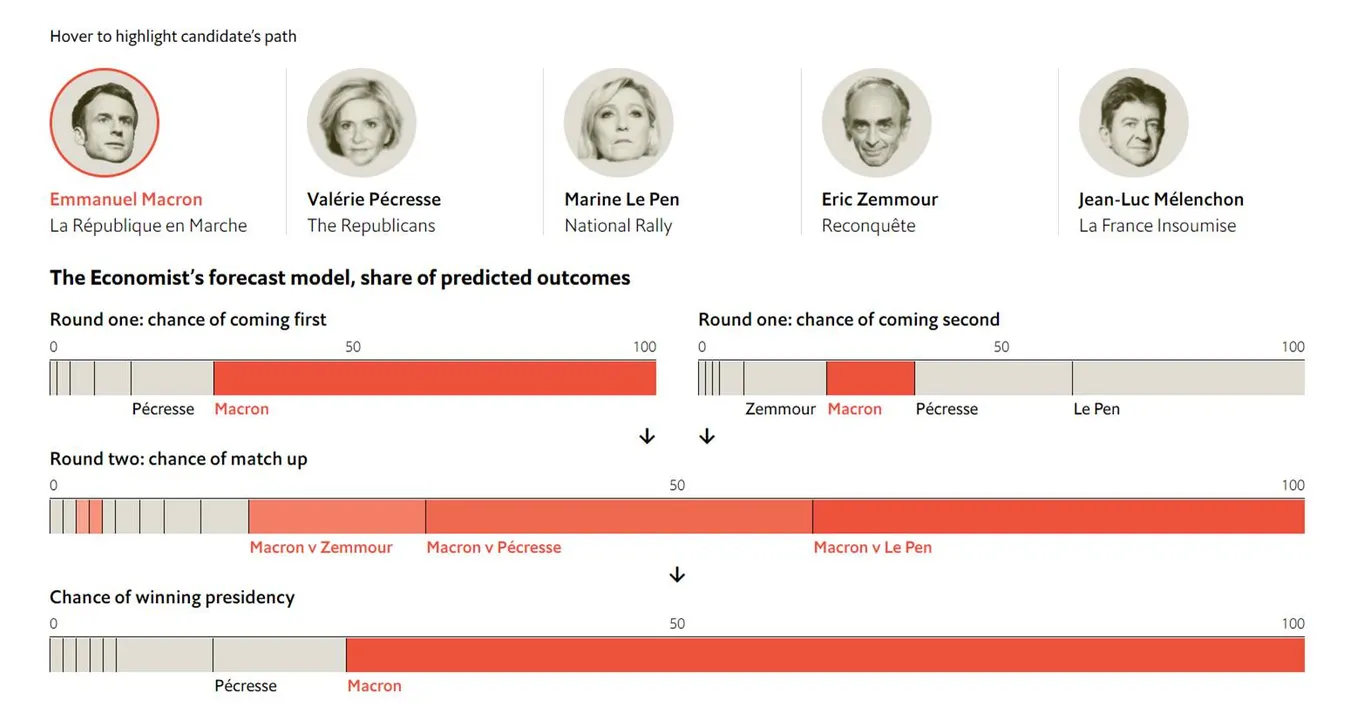
The Economist’s French presidential election model forecasts a 79% chance of victory for Emmanuel Macron; potentially serious challenge from Valérie Pécresse
Read more



Business Finance, Consumer, Entertainment, Government, Health, Lifestyle, Luxury, Non Profit, Technology, Transport, Travel, Racing, Sustainability, Innovation, Economist Films, Editorial, Advertising, Circulation, Business Finance, Government, Non Profit, Lifestyle, Consumer, Automotive, Entertainment, Health, Luxury, Music, Banking
LONDON, UNITED KINGDOM—April 8, 2021—The Economist, one of the world’s most trusted sources of global news and analysis, has a new Special Report titled “The Future of Work.” The report, which is live today and in the April 10 print edition, explores how work will change over the medium term, with a focus on the covid-19 pandemic. The report looks at the pandemic’s enormous impact on labour markets and how overall, it will make the world of work better than it would otherwise have been.
The jobs numbers a year ago were grim. Unemployment across the rich world (those in the OECD) rose from 5% to 9% in April 2020. In its June 2020 forecasts, the OECD foresaw worse to come. If there were a second wave of covid-19 at the end of the year, it said, unemployment would reach 12.6% before inching downwards. But by the end of 2020 it was 6.9%, half the level that the OECD had feared.
The coming wave of jobs will not catch everyone, at least not for a while. But it will be broader and more powerful than even optimistic pundits had predicted.
How work is changing and improving:
For more information or to interview Callum Williams, senior economics writer, about this Special Report, please contact:
US TomAmos@economist.com / UK JessicaKeating@economist.com
About The Economist (Economist.com)
With a growing global audience and a trusted reputation for insightful analysis, The Economist is one of the most widely recognised sources covering current affairs in the world. In addition to the weekly digital and print editions and website, The Economist publishes Espresso, a daily news app, and Global Business Review, a bilingual English-Chinese product. The Economist produces several podcasts each week and short- and long-form video. The Economist maintains robust social communities on Facebook, Twitter, LinkedIn and other social networks. A recipient of many editorial and marketing awards, The Economist was named the most trusted news source by the 2017 Trusting News Project Report.
2 February 2022
2 February 2022
17 November 2021
12 November 2021