2 February 2022
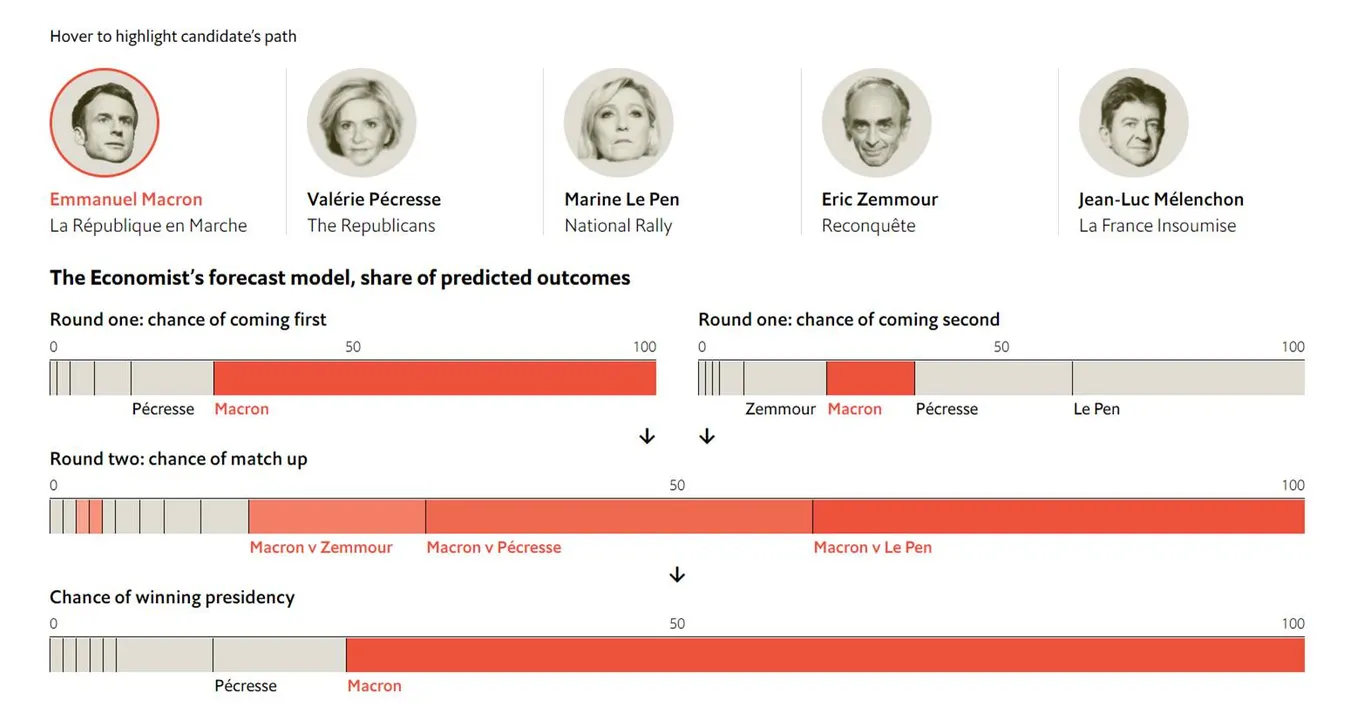
The Economist’s French presidential election model forecasts a 79% chance of victory for Emmanuel Macron; potentially serious challenge from Valérie Pécresse
Read more


Business Finance, Consumer, Entertainment, Government, Health, Lifestyle, Luxury, Technology, Sustainability, Innovation, Editorial, Advertising, Circulation, Business Finance, Government, Public Sector, Technology, Sustainability, Lifestyle, Consumer, Automotive, Entertainment, Health, Luxury, Retail, Banking
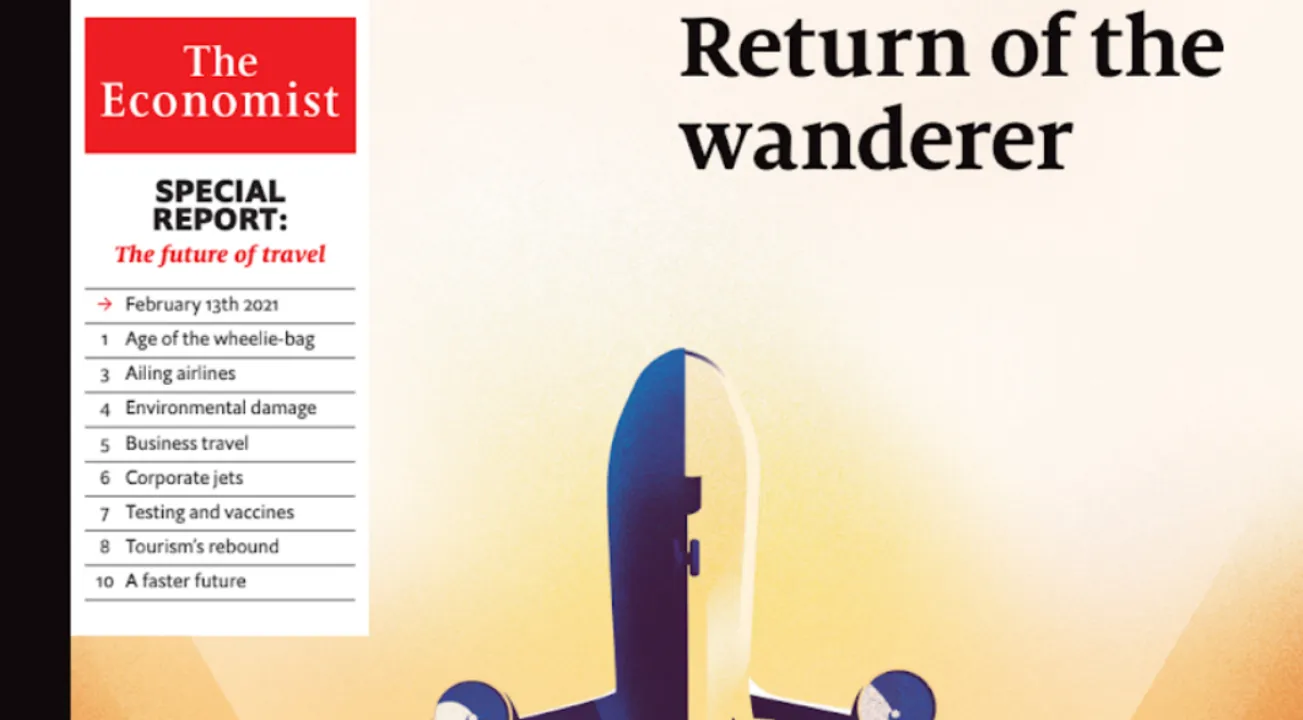
LONDON, UNITED KINGDOM - February 11, 2021 - The Economist, one of the world’s most trusted sources of global news and analysis, has a new Special Reporter titled “The future of travel” online today at economist.com and in the February 13th edition. The report looks at travel in light of the covid-19 pandemic and environmental concerns, both of which could change the means and frequency of trotting the globe.
The romance of travel has waned in recent decades. Low-cost airlines are no match for the plush ocean liners of yesteryear. But international jaunts have become commonplace for many in the rich world.
The Special Report looks at the challenges and opportunities for the future of travel.
KEY OBSERVATIONS
Covid-19 brought flying close to a standstill.
The outlook is not all dark clouds.
Until the second half of the 20th century international travel was the preserve of the rich and the few. In the far distant past those with a purpose were prepared to bear the time, trouble and expense of travelling by wind or horsepower. But in the 18th century travelling for fun started to take off as Grand Tourists hit the continent. In the 19th century, as a wealthier middle-class grew in Europe, tourist operators such as Thomas Cook started to meet a new demand as the first wave of globalisation made it necessary for businessmen to hit the road.
But the real surge in international travel came with the advent of flying, still the only way to cover vast distances rapidly. The Trans-Siberian Express between Beijing and Moscow takes over five days; a liner across the Atlantic four days; a flight on the same route a few hours. A confluence of deregulation of state-owned airlines bringing competition and cheap fares, a burgeoning global middle-class keen to explore and a recent wave of globalisation that made business travel vital to connect disparate operations of global firms sent travel into overdrive.
Expansion has been spectacular and outpaces economic growth. Over the past three decades air travel has doubled every 15 years. Airlines sold around 4bn seats in 2019. In part that’s because in 1950 25m tourist arrivals were recorded worldwide and by 2018 it was1.4bn. Business travel accounts for a quarter of all travel spending and has tripled in size since 1995. Spending was estimated to hit $1.5trn in 2020, before the virus struck.
If the pandemic is not brought under control through a vaccine or some way to minimise risk and reassure travellers is not found this has implications for vast businesses that have grown rapidly in recent decades, from airlines and planemakers to travel firms and the many firms in countries that count on a stream of tourist income. It also has implications for international businesses that need to maintain connections between distant operations, far-flung families and friends that want to stay in physical contact and the many people for whom regular holidaymaking has become an indispensable part of their existence.
Optimists point out that the underlying reasons for the growth of travel remain—expanding wealth has seen a boom in tourists from China. Some 80% of the world’s population has yet to step on board a plane. But if the virus makes travel harder and more expensive, perhaps the industry may never fully recover.
You can read the full report here.
For more information and to interview Simon Wright on the Special Report, please contact:
Tom Amos/The Economist (US), tomamos@economist.com /+1 917 856 5453
Holly Donahue/The Economist (UK/global), hollydonahue@economist.com /+44 (0)7715621079
About The Economist (www.economist.com)
With a growing global audience and a trusted reputation for insightful analysis, The Economist is one of the most widely recognised sources covering current affairs in the world. In addition to the weekly digital and print editions and website, The Economist publishes Espresso, a daily news app, and Global Business Review, a bilingual English-Chinese product.. The Economist produces several podcasts each week and short- and long-form video. The Economist maintains robust social communities on Facebook, Twitter, LinkedIn and other social networks. A recipient of many editorial and marketing awards, The Economist was named the most trusted news source by the 2017 Trusting News Project Report.
2 February 2022
2 February 2022
17 November 2021
12 November 2021