2 February 2022
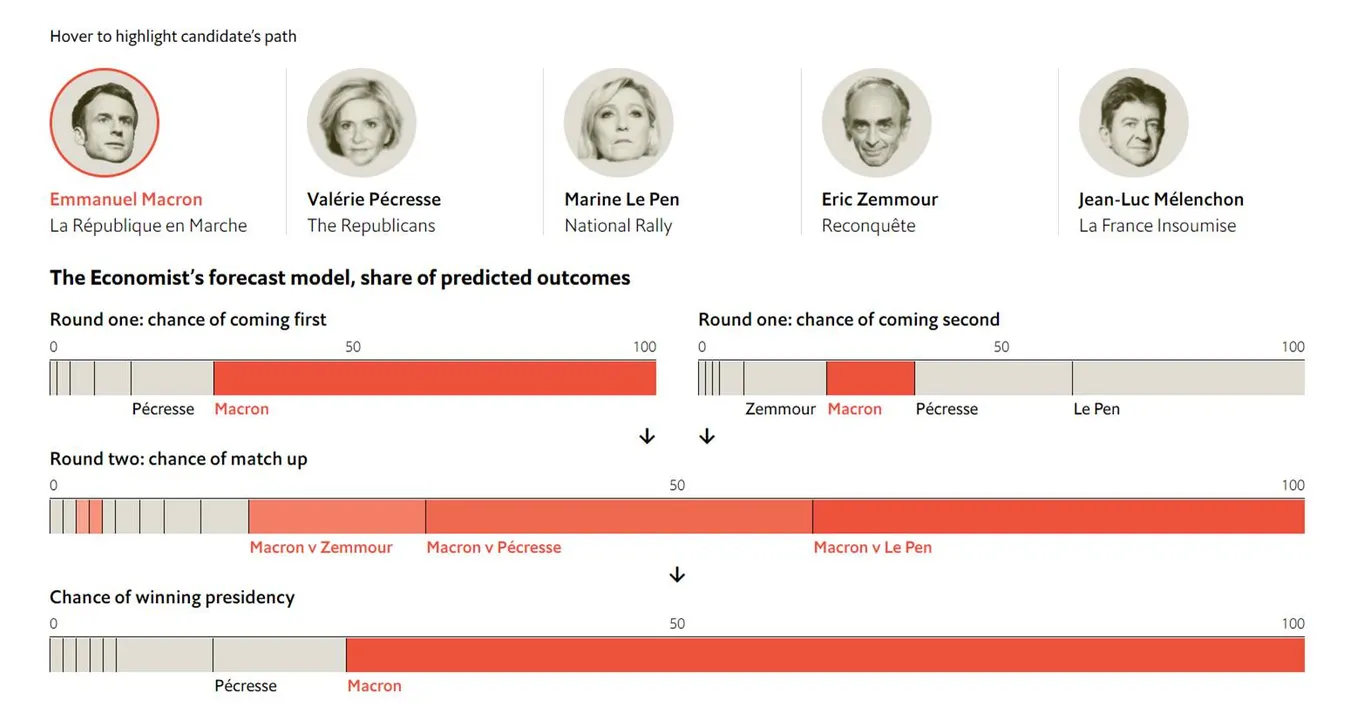
The Economist’s French presidential election model forecasts a 79% chance of victory for Emmanuel Macron; potentially serious challenge from Valérie Pécresse
Read more


Business Finance, Consumer, Entertainment, Fashion, Lifestyle
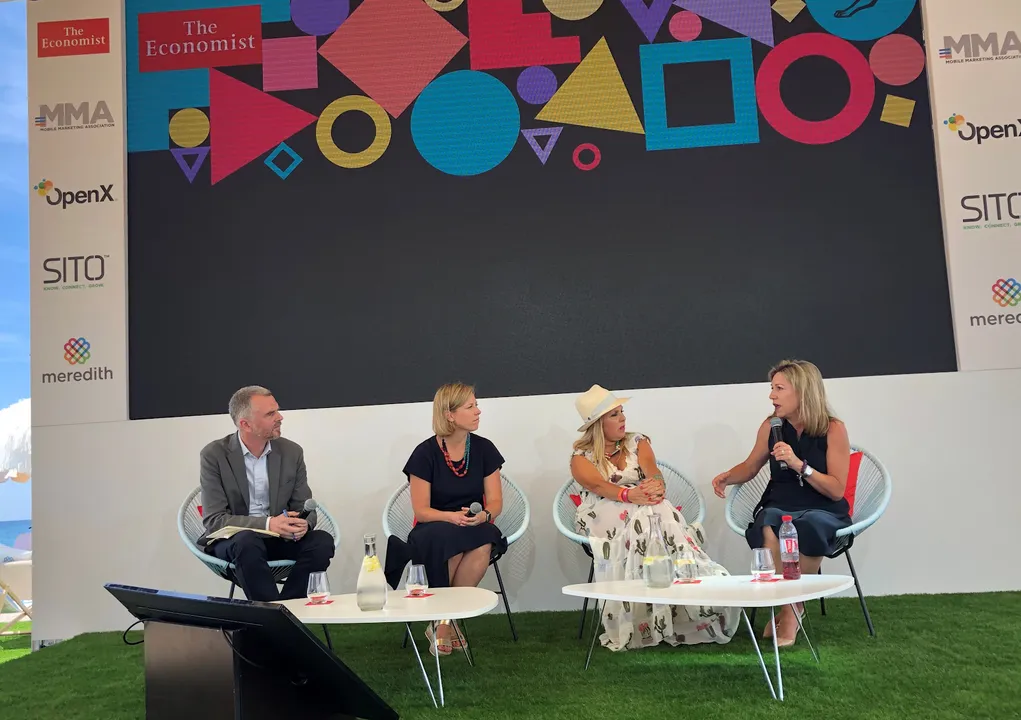
Cannes, France - June 21st 2019 - The Economist Group (TEG) has returned to the Cannes Lions International Festival of Creativity with a programme of engaging debate and discussion led by The Economist journalists. In its final daily Wake Up With The Economist At Cannes Lions panel, Andrew Palmer, Executive editor, The Economist spoke with Aline Santos, Executive Vice President, Global Marketing and Chief Diversity & Inclusion Officer at Unilever, Meg Farren, Chief Marketing Officer at KFC UK & Ireland and Suzanne Kounkel, Chief Marketing Officer at Deloitte US.
Kicking off with a discussion of their stand-out takeaways from this year’s Cannes Lions, the conversation went on to cover online advertising, data, the client/agency relationship and how ditching stereotype thinking can lead to greater creativity.
KFC’s Farren also delved into the famous FCK ad - admitting that their agency partner Mother had to argue its case four times before she agreed to run the now runaway success.
What mattered this year at Cannes Lions
For Suzanne Kounkel, there were two key stand-outs: a growing collaboration within the industry for ‘higher purpose thinking’ and an uptick in the success of combining creativity, data and tech. Meg Farren, meanwhile, was struck by the inspiring - and surprising - presence of far more women on stage. She also pointed to vast technological progress, such as how you can use AI to understand unstructured data.
Aline Santos argued “that we are in a turning point in or industry. We had a very negative data point in the UK this year, saying we are the least trusted profession… this week is the beginning of the turnaround.” She pointed to the work from the Cannes Lions organisers in urging all of the jury members to ensure that ads that use stereotypes can’t win at Cannes.
The problem with online ads
When the question “what went wrong with online ads?” was put to the panel, Suzanne Kounkel offered her insight by acknowledging that “we were letting technology lead rather than us”, which was a sentiment agreed upon by both Aline Santos and Meg Farren in regards to data and the role of deep personalisation. Aline Santos argued that “everyone wants an internet in which kids are safe and you don’t feel violated” but brands haven't quite got the balance between the use of data and creating trust.
Meg Farren sees tech and data as a means to an end, rather than the end itself. She recognises that the “temptation is to use all the data” but “it's only useful if you can match it with understanding to turn it into something useful for the consumer”. Suzanne Kounkel agreed that there is too much importance placed on data, suggesting that its use should be about “knowing what the data is telling you but not letting the data be something you hide behind”.
The relationship between ad agencies and clients
Answering a question from the floor about procurement squeezing agency budgets, the panel all agreed that this was a false economy. Aline Santos articulated this point: “if you squeeze your agency you won’t get the talent and creativity that you need.”
Meg Farren concurred, adding: “the people at the agency are people, so why would you treat them differently. It’s obvious.” She illustrated this further by talking the audience through how KFC and their UK agency Mother reacted to the KFC chicken shortage last year. Although admitting externally the reaction in the UK was that it was ‘hilarious’, internally it was ‘awful’: there was a huge concern about the impact it was having on franchisees and staff. Mother knew that once the worst had passed there would be a need for KFC to apologise. But Farren admitted that when Mother brought her the now famous FCK apology ad to her she said no. Not once, but three times. She now points to the agency’s refusal to be cowed as one of the best parts of the whole experience.
Brand purpose begets great work
Aline Santos spoke about the role of brand purpose in giving a brand the conviction to create great work, using the example of Brooke Bond Red Label tea in India and its campaign featuring hijras, India’s transgender community, as part of its brand purpose to bring people together. Whilst they received a lot of backlash and lost customers, they won far more - and according to Santos, those customers were ones that they would prefer to have. Suzanne Kounkel agreed with the importance of purpose, saying that as a 170 year old company, Deloitte’s roots were always in the community and that they have “committed to changing the trajectory of 50m lives by 2030.”
Diversity and Inclusion
When discussing a popular topic from the week, diversity and inclusion, the panelists agreed that having diverse and trained teams is important for brands looking to champion inclusivity. Suzanne Kounkel noted that “this year we had all of our leaders go through inclusion training” to help them with “identifying situations where you were an actor, observer or a target”, which will ultimately allow them to identify what they are bringing to the decisions that they make.
Meg Farren added that KFC had enacted something similar through unconscious bias training, with one of the biggest learnings being “to just ask questions”. Aline Santos offered her insight from an experiment Unilever undertook with UCL which saw teams and marketers participate in a DNA test, with surprising results. Participants were then offered training because “when you’re surprised about yourself, you’re most open” and they found that “there was a decrease in stereotyping and in increase in original thinking”.
For more information contact:
Hilary Gray / Gill Browne
hilary.gray@propellergroup.com/ gill.browne@propellergroup.com
UK landline: +44 203 301 5353 / UK mobile: +44 750 778 9449
Lauren Hackett: laurenhackett@economist.com
About The Economist Group
More than just a newspaper, The Economist Group is a world-renowned multinational media company that inspires and connects with the most influential audiences across the globe. We make thought that counts – powerful, provocative thought that helps brands engage on a different level with audiences around the world. The Economist Group creates highly original communication programmes by connecting thinking between insights, digital content, live experiences and distribution. The Economist Group brands include; The Economist, ‘The World In…’, 1843, Economist Films, Economist Careers Network, Economist Intelligence Unit, Economist Events, Signal Noise, TVC, EuroFinance and [E] BrandConnect. Visit https://cannes.economist.com/ for further information.
2 February 2022
2 February 2022
17 November 2021
12 November 2021