2 February 2022
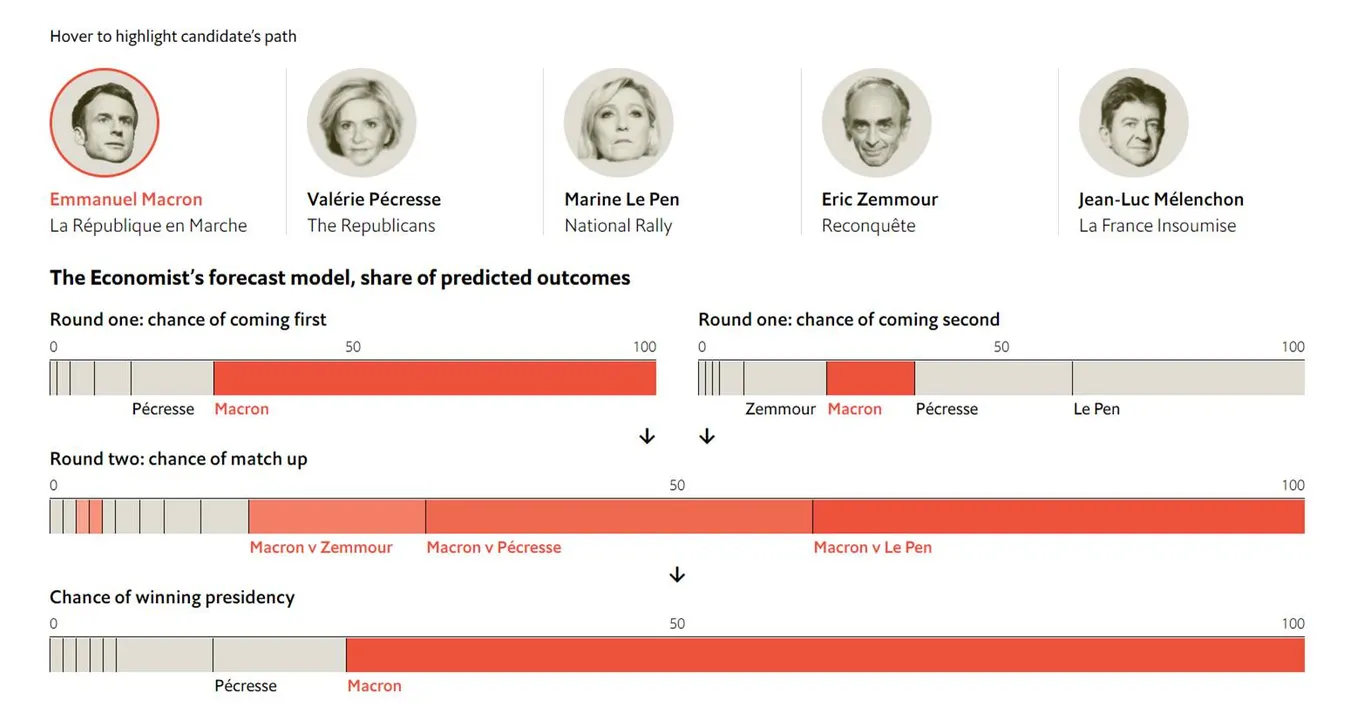
The Economist’s French presidential election model forecasts a 79% chance of victory for Emmanuel Macron; potentially serious challenge from Valérie Pécresse
Read more


Business Finance, Consumer, Entertainment, Government, Lifestyle, Non Profit, Technology, Business Finance, Government, Non Profit, Public Sector, Technology, Lifestyle, Consumer, Entertainment
Key insights:
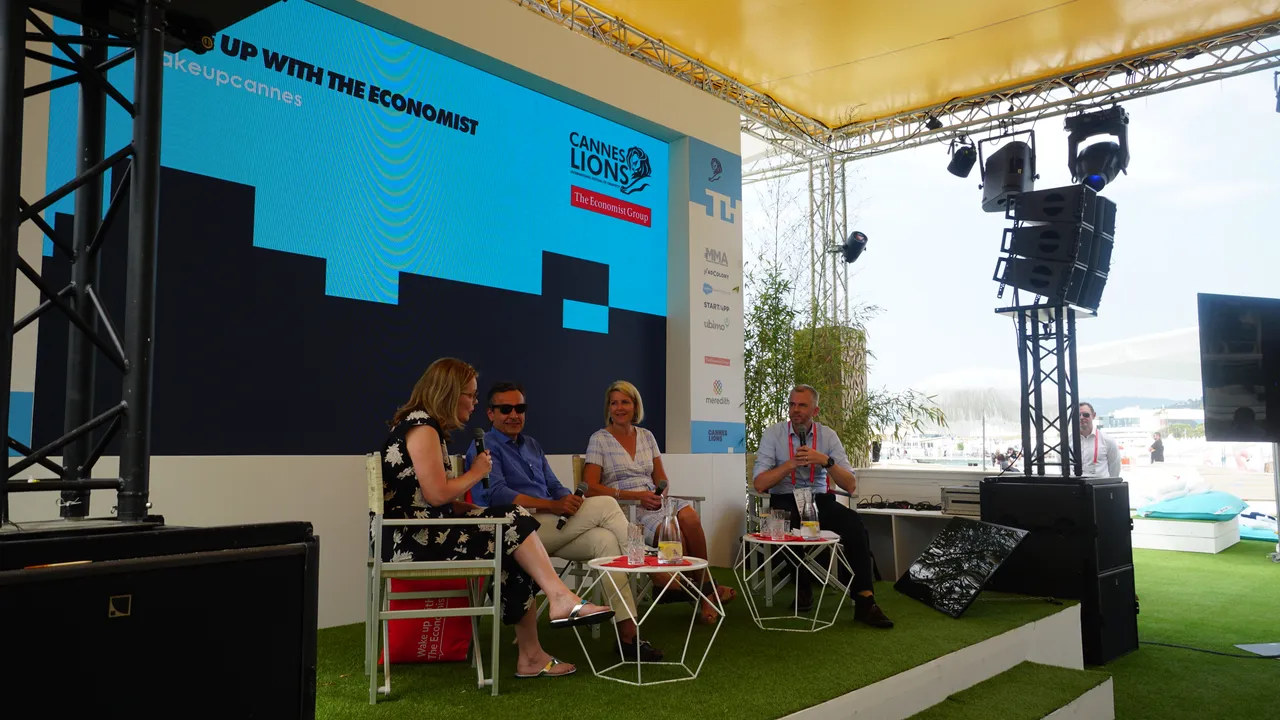
Purpose is essential to navigate the current social and economic landscape(Cannes) – The Economist Group held its third ‘Wake Up with The Economist’ panel session at the Cannes Lions festival today. Moderated by Andrew Palmer, Business Affairs Editor at The Economist, today’s session featured candid discussions from Elizabeth Rutledge, CMO at American Express, Antonio Lucio, CMO at HP, and Molly Battin, EVP and Global Chief Communication and Corporate Marketing Officer, Turner.
Purpose-driven marketing and diversity emerged again as key themes during the morning, with Antonio Lucio saying that having a clear sense of purpose was more important than ever to help navigate the current social, economic and cultural landscape. “The two issues that are critically important for us are diversity and sustainability.”
Molly Battin said Turner was about storytelling to help create connections – “today while we’re more connected than ever, in many ways we’re more detached. Our stories help bring people together and form those communities and we think that is so important.”
“We’ve been looking at it a lot from the inside out and how do we start with our own employees so they understand what our purpose is and they can bring it out to the world.”
Speaking about HP’s focus on diversity, Lucio said it was a source of innovation – “without it we wouldn’t be able to deliver the types of products or services that we are delivering”.
A gender imbalance across HP’s marketing function had been addressed, from just 20% female - “in a business where 50% of our revenue comes from females” – to 50% of the most senior marketing leaders now being female. The focus on diversity had extended to HP’s agencies and productions houses too.
“At the end of the day you’re only going to transform the industry if you maintain holistic and sustained change across the clients that write the brief, the agencies that develop the work and the production houses that bring it to life.” Being more diverse helped HP’s brand preference scores rise by 26% and saw revenue per impression increase by 32%.
Rutledge said American Express held a women’s conference with 170 of its most senior female leaders and out of that came an initiative to focus on reducing unconscious bias – as well as training and workshops “it’s about giving people a voice to call it out when it happens”.
Battin said Turner has also brought together senior female and male leaders from around the world – “we have to do this together” - and agreed that unconscious bias training was key. Turner has rolled it out across the company and has a common language – “we’re conscious of how unconscious we are of this sometimes”.
Addressing the issue of how relationships with platforms might have changed because of recent concerns around data transparency, all panellists said they had adapted the way they work.
Lucio said HP had been building capabilities across data and analytics in-house over the last two and a half years. “That has profoundly changed the way we do marketing, it has profoundly changed the capability of the people that we’re bringing on board and it also profoundly changes the relationship with the Facebooks and Amazons of this world and the relationship you have with your agencies.”
Battin said having access to more data and analytics has changed the way Turner approached marketing and its advertisers – “switching to more audience-based buying and shifting how you think about your media plan in total”. She said measurement remained a key challenge.
When asked about Facebook, Rutledge said it was just one of many channels. She said American Express was using its own customers as a platform for growth, citing a successful programme called ‘Member Get Member’.
With the conversation turning to the question of the potential ‘creepiness of personalisation’, Lucio agreed that “the creep factor is a real issue”.
Battin said it shouldn’t be creepy if done right – “it should be a relationship and it’s a two-way get to know you”. “Our research shows us that if we give value and we’re transparent then it’s a two-way benefit”.
On GDPR, Rutledge believes it will have a positive impact on personalisation. Lucio agreed and hopes it will become a global standard in time – “making privacy the default position as opposed to something you opt in is a good business decision”.
All panellists agreed that the rise of data and Artificial Intelligence had changed the type of people joining marketing teams, with Battin saying skills sets are “completely different to even three years ago”.
She said Turner has introduced a reverse mentoring system, learning from the younger generation and seeing things through their lens - “it’s really important”.
Tomorrow’s ‘Wake Up with The Economist’ panel, which will be moderated by Zanny Minton Beddoes, Editor-in-Chief at The Economist, includes the following world-class line-up:
Alison Lewis, Chief Marketing Officer, Johnson & Johnson ConsumerFor details on this press release or for further comment from The Economist Group, please contact rebeccapartridge@economist.com
2 February 2022

2 February 2022
17 November 2021

12 November 2021