2 February 2022
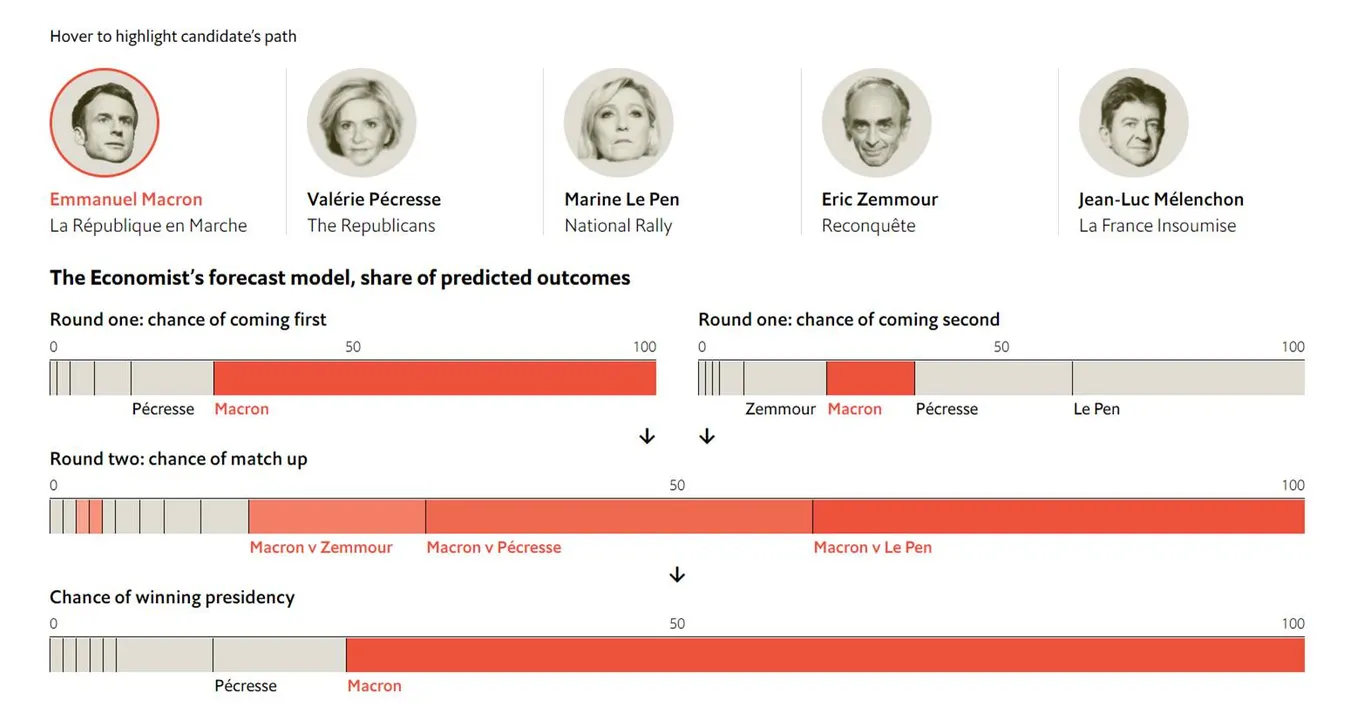
The Economist’s French presidential election model forecasts a 79% chance of victory for Emmanuel Macron; potentially serious challenge from Valérie Pécresse
Read more


Business Finance, Consumer, Entertainment, Government, Health, Lifestyle, Luxury, Non Profit, Technology, Travel, Racing, Sustainability, Innovation, Editorial, Government, Non Profit, Technology, Sustainability, Lifestyle, Entertainment, Health, Luxury
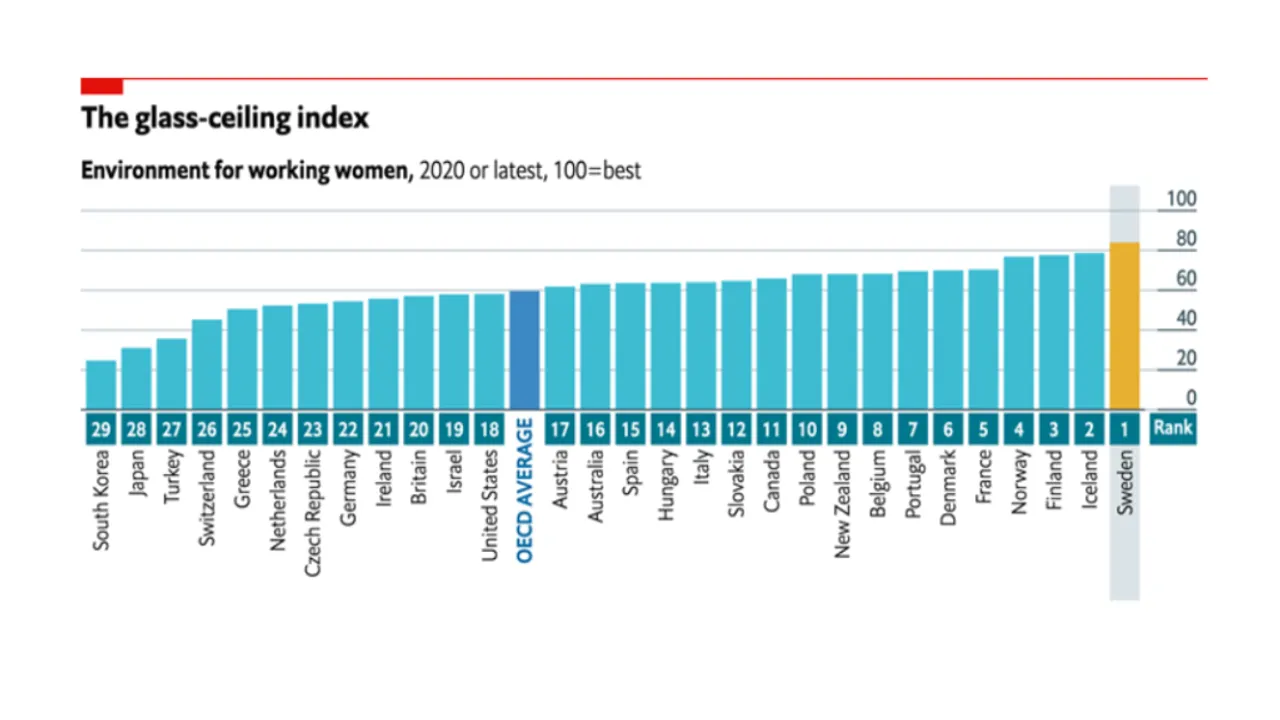
LONDON, UNITED KINGDOM — March 4th 2021 — Ahead of International Women’s Day, The Economist’s Glass Ceiling Index (GCI) https://www.economist.com/IWDay shows that women are still lagging behind their male counterparts in senior positions, making up on average only a third of managers across the OECD. The GCI is a yearly assessment of where women have the best and worst chances of equal treatment at work in countries in the Organisation for Economic Co-operation and Development (OECD), a group of mostly rich countries.
The GCI, which combines data on higher education, labour-force participation, pay, child-care costs, maternity and paternity rights, business-school applications and representation in senior jobs to create a ranking of 29 OECD countries, shows that Sweden is the best place to work if you are a woman, followed by its Nordic neighbours, Iceland, Finland and Norway. The Nordics are particularly good at helping women complete university, secure a job, access senior positions, and take advantage of quality parental-leave systems and flexible work schedules.
South Korea bottoms out the index for the ninth year in a row with Japan and Turkey not far behind. Societal norms in Asia still expect women to choose between having a family or a career.
According to the analysis accompanying this year’s GCI index https://www.economist.com/GCIndex, there is progress being made in America where 41% of managers are women and 28% of board members are female, above the OECD average. This is evidenced in part by women taking CEO roles at notable American companies over the past year including Citigroup, UPS, Walgreens and TIAA.
Additional highlights of The Economist’s 2021 glass-ceiling index:
This is the ninth year that The Economist has released its glass-ceiling index. When it was launched in 2013 there were five indicators and 26 countries; today it consists of ten indicators including maternity and paternity leave for 29 OECD countries.
The Glass Ceiling Index sits within a new hub, "Women Around the World", The Economist has launched in celebration of International Women’s Day. Sitting in front of the paywall, it highlights some of the best coverage across The Economist on the lives of women around the world—from inspiring stories to the political and economic inequalities that persist globally. The hub is supported by a content-led marketing campaign, "Press Forward", aimed at attracting new audiences by showcasing the breadth of The Economist's coverage of women that highlights equality, inclusion, diversity and intersectionality.
"The Economist is uniquely positioned to cover the fight for equality for women around the world. For International Women's Day, in addition to the Glass Ceiling Index, we are highlighting women who are breaking through, as well as shining a light where there is still progress to be made." Kim Miller, global chief marketing officer, The Economist Group. To view the full interactive glass-ceiling index, please visit The Economist’s hub with content on International Women’s Day: https://www.economist.com/IWDay
The glass-ceiling index 2021
Best and worst OECD countries to be a working woman
1. Sweden
2. Iceland
3. Finland
4. Norway
5. France
6. Denmark
7. Portugal
8. Belgium
9. New Zealand
10. Poland
11. Canada
12. Slovakia
13. Italy
14. Hungary
15. Spain
16. Australia
17. Austria
OECD AVERAGE
18. United States
19. Israel
20. Britain
21. Ireland
22. Germany
23. Czech Republic
24. Netherlands
25. Greece
26. Switzerland
27. Turkey
28. Japan
29. South Korea
For more info or to interview our journalists on the glass-ceiling index, please contact:
UK HollyDonahue@economist.com / US TomAmos@economist.com or to interview one of our business executives on The Economist’s IWD initiative: JessicaKeating@economist.com
About The Economist (Economist.com)
With a growing global audience and a trusted reputation for insightful analysis, The Economist is one of the most widely recognised sources covering current affairs in the world. In addition to the weekly digital and print editions and website, The Economist publishes Espresso, a daily news app, and Global Business Review, a bilingual English-Chinese product. The Economist produces several podcasts each week and short- and long-form video. The Economist maintains robust social communities on Facebook, Twitter, LinkedIn and other social networks. A recipient of many editorial and marketing awards, The Economist was named the most trusted news source by the 2017 Trusting News Project Report.
2 February 2022
2 February 2022
17 November 2021
12 November 2021